Tuesday, January 29, 2008

2-5/60 - Saturation - Contest!

I am delighted to dedicate the 4 new minutes of the 60/60 project to a generous participant, and close relation of mine, Brigitte Urien.

Saturation is a musical setting of Ruth Lepson's poem Saturation (yes, it's the same title,) featuring the poet herself as the main speaker. Remember, I met Ruth last summer, and we had fun performing and improvising together.
Saturation, the poem, was published in the review Carve - poems in August 2006.

   Creative Commons License

Saturation in Music and Poetry

Among the four great presents that I received for this piece, the one that surprised me the most is The New Media Reader. It is a fascinating book, that puts into perspective the Internet with the Oulipo movement, Eliza, and other essential projects of the 20th century. It gave me the idea of using Speech Synthesis to read a few sentences of the poem. This book addresses the concept of Saturation, not in water like the poem, but in information and communication.

Speech Synthesis sounds like advanced technology, but this time it's just my laptop reading with more or less funny voices. If you use a Mac, it's really easy to do. Create a new document with the TextEdit Application, type a few words (in English), and do Menu Edit -> Speech -> Start Speaking :-)

Contest: win Morphology!

The last two verses of Ruth Lepson's poem are:

I love
Arthur Dove

In my sonic work, Ruth doesn't speak these words. You will be the winner if you are the first person to find out how these two verses are suggested. I will offer you Ruth Lepson and Walter Crump's newest book: Morphology. It is a difficult contest, so here is a hint: you are looking for two references, one for "I love", another one for "Arthur Dove"; these are the 2 last lines of the poem, so listen carefully to the end of the music.

60/60 project: thank you!

Thank you to all the participants. More compositions will come, as you will see and hear on this blog. Subscribe to the RSS feed to stay tuned.

I address very special thanks to Ruth Lepson. She accepted, not only to lend her words, but also to come to the studio and record them. In the spirit of the 60/60 project, I will offer her a present. I have already chosen it, but it has not arrived from France yet. I will let you know about it, but for the moment, I prefer to keep it a surprise for Ruth ;-)

To participate, visit the 60/60 composition project FAQs.

Attribution

I must credit Mario Caroli for a few flute samples that I recorded (first appearance at 03:33).
You can hear mouse clicks, computer keyboard and printers, and a few sounds from The Freesound project. Here is the attribution list. Click to listen to the original sounds:

Thursday, January 24, 2008

1/60 - Cell 1 - My first ringtone!

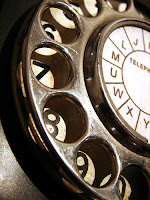
phone

My first composition for cell phone! Click play to listen, and click on "1/60 - Cell 1" to go to last.fm and download the file. If your cell phone accepts mp3 ringtones, you should manage to use this one easily (check your manual...)

Jean-François Charles1/60 - Cell 1

Maybe you recognize these bells: I just extracted them from 1/60 - Aria. You can listen again to the Aria:

Jean-François Charles1/60 - Aria

Each bell has its own sound

cow bells

In the Alps, each bell is different. There is a chance component in the process of fabrication that makes each sound unique. The sound depends also on the beater you use. In this recording, to stay within the theme of 1/60 (human / machine, natural / artificial), I produced artificial bell sounds, and I tried to give each bell a slightly different character. I used a physical modeling audio software, that enabled me to modify the "material" of the bells, and other parameters, such as how the beater bounces on the bell to create ornamentation.

Physical modeling synthesizers

cell 1 jean-francois charles

Even if physical model synthesizers used to be reserved to a small circle of initiated people (I was first introduced to Ircam's Modalys), it is no longer the case, and today, you may also play with:

There are also hardware products:

Pictures under Creative Commons license: phone by aussiegal , cow bells by Danforth1

Thursday, January 17, 2008

Fun teaching in Helsinki

Helsinki Sibelius Academy

In March 2007, I was invited by Andrew Bentley and Sibelius Academy to give a week of lectures and workshops in Helsinki. The topic was live electronics - spectral sound processing with Max/MSP and Jitter. Andrew Bentley is not only a real connoisseur of the developments of electronic music (he was an early actor of the Composers Desktop Project), but also a singular artist: I hope I will be able to let you know more about his art in the future.

I really enjoyed teaching there, and the conditions were ideal:

  1. there was a team of 10 students, active and interested.
  2. each student worked on a computer with the proper software installed (Max/MSP/Jitter, from Cycling 74.)
  3. we met every morning during 3 hours, over 5 days. Every morning, we had time for some new concepts, as well as hands-on patching, or collective thinking about design and other topics.

Gig at the Feeniks Club

Every Thursday night, the Academy's café is turned into a music club. Would that be great if every conservatory organized such a fun pedagogical and social tool! Students and faculty have the opportunity to share music in a not too formal setting, and it's great.

Helsinki Feeniks Club Jean-Francois CharlesAfter a group from the education department, who performed original songs in finnish, and before students patching live a Doepfer analog synthesizer, we performed Plex (Andrew Bentley on live electronics and myself on clarinet.) Thanks a lot to Libero Mureddu, who shot the video with his cell phone! (here is Libero's blog.)

Syllabus

Here is the syllabus I sent to the students before my week of teaching:

Max/MSP/Jitter: spectral sound processing, and more.

Sibelius Academy
Helsinki, March 26th-30th, 2007
Jean-François Charles

Day 1

  • Overview of the topic and of the content of the week
    This overview could be called “Spectral processing, or having fun with graphics and sound.” It is general enough and may be open to any student or faculty member (not only to the computer music specialists).
  • Exchange
    I will show a patch of mine. That would be great to have each student show a patch he is familiar with. Bring your patches! (with scores where applicable)
  • Spectral explorations 1
    Sonogram. Fast Fourier Transform.
  • Patching session 1
    Sonogram, recording spectral data into Jitter matrices, frame to frame playback.

Day 2

  • Spectral explorations 2
    Phase vocoders: Max/MSP version(s) versus Max/MSP/Jitter version(s). Variable-speed playback.
  • Jitter
    Matrices, filters, expressions.
  • Patching session 2
    Play with pictures. Play with spectrograms.

Day 3

  • Spectral explorations 3
    Real-time spectral processing with Max/MSP. Denoiser, amplitude compression, frequency shifting, pitch shifting.
  • Concert patches 1
    User Interface. GUI. Score. Presets. Pattrstorage. Concert and rehearsal situations.
  • Patching session 3
    Sound file player. Spectral processing.

Day 4

  • Spectral explorations 4
    Back to our Max/MSP/Jitter phase vocoder. Blur playback. Transients. Interpolation between sounds. Mosaicing.
  • Concert patches 2
    CPU usage. Max/MSP/Jitter threads. Turn on/off processing. Transition between presets.
  • Patching session 4
    From a score to a patch.

Day 5

  • Spectral explorations 5
    Real-time spectral processing with Max/MSP and Jitter. Real-time Freeze.
  • Object-oriented programming
    Max is not object-oriented. Why would we? Do not cross the abstraction barrier.
  • Patching session 5
    Freeze and variations.

Further topics

Depending on the time and the level of interest, we will add topics and patching work. Propositions:

  • Jitter, OpenGL, Graphical Processing Unit, power usage optimization.
  • Working with sensors: overview of solutions. My upcoming augmented clarinet.
  • Work on your personal projects.

References

Sunday, January 13, 2008

1/60 - Aria

Do you remember the 60/60 composition project?

I am thrilled to dedicate the first minute to Katherine Lee, who chose in the original list the CD Bach: The Goldberg Variations 1955 Performance: Zenph Re-performance.

Here is my composition, titled Aria. Click play to listen:

  Creative Commons License

Music, humans, and machines

Zenph Bach Gould CD In the CD that Katherine offered me, the version of the Goldberg Variations raises many questions. The piano plays by itself: it is a Yamaha Disklavier Pro. The Zenph team prepared a high resolution MIDI version of Glenn Gould's famous 1955 interpretation, and recorded the electronically driven piano. They even produced a concert during which the piano played by itself Glenn Gould's interpretation.
But the best is here: what do you think about this quote from the booklet?

"In effect, a long-dead pianist can now give live performances or make recordings of interpretations that are still recognizably his."

Speaking about humans and machines making music, you have to watch Toyota's Partner Robot playing trumpet. Yes, it is a real robot playing a real trumpet!
Here is a picture of a whole Toyota band performing at 2005 World Expo in Japan:

robots toyota trumpet trombone

Update on the 60/60 project

First of all, let me thank all of you who have taken part to this exciting project! Today, January 13th, I have received 10 presents, and it is a real treat to be surprised and challenged by your choices and comments. I will compose the next minutes for flute, a recorded poem, electroacoustic music, and maybe live electronics. More on that later...

To participate, visit the 60/60 composition project FAQs.

Attribution

Did you hear the Boston T, the Seoul railway station, the Erhu, and the Indian bus? It's the first time I use samples under a Creative Commons license. All samples come from The Freesound project, and here is the attribution list. Feel free to click to hear the original sounds, and learn more about them.

Monday, January 7, 2008

Homage to Maurice Merle

Maurice Merle Arfi

Plex - alto saxophone version

arfi jean-francois charles maurice merle

On May 6th, 2004, with numerous friends of Arfi's (Association à la Recherche d'un Folklore Imaginaire) and Maurice Merle's, we met together at in Lyon, France, in Théâtre des Jeunes Années for the night "Le Souffle Continue." Philippe Gilbert (sax) and myself (live electronics) played Plex, and I dedicated this version with alto sax to Maurice Merle. Here is the recording:

Short biography

arfi maurice merle

Maurice Merle was born on April 27th, 1945 in Le Puy, France. He graduated from a business school, and became a saxophonist, composer, and arranger. He creates in 1968 the Free Jazz Workshop with Jean Mereu, Jean Bolcato, and Pierre Guyon. With Christian Rollet, he is at the origin of La Carrérarie, a company of Musical Theater for Children. Since 1972, he has created numerous shows, from l'Opéra Jubjub to Prismo, along with Steve Waring and Alain Gibert.

In 1977, he is among the founders of Arfi, and has played in the most important projects of this collective. With the Workshop de Lyon and the Marmite Infernale, he has toured South America, Europe, Northern and Eastern Africa, and Middle East. He has taken part in the projects around movies, including Potemkine, Tarzan, Paris' Girls, and Tragédie au Cirque.

During 3 years, he has been the president of the National Collective of Jazz and Improvised Music Organizations (CNAJMI). As a composer and arranger, he registered 164 works at the French society for composers, the SACEM. Maurice Merle passed away on April 2nd, 2003.

Thank you for leaving comments if you know precisions/corrections to this biography.
Read also the biographies of all the musicians members of the "collectif arfi."

Le Souffle continue

Philippe Gilbert is a great saxophone player, and has been my jazz teacher during 2 years. He is not only a serious jazzman, but also a fun artist. Check for instance Les gars de la marine or La grosse couture!

arfi jean-francois charles marmite infernale

Look for us on the picture! For the Grand final of the night, I played the basset-horn. Philippe Gilbert played alto sax.This picture was taken by Mikiko, a fan of Louis Sclavis's, who runs the website Le site de Louis Sclavis. Don't forget that Louis Sclavis spent an important time with the Arfi musicians, before the beginning of his solo carrier.