Wednesday, July 27, 2011

Classical concerto, modern cadenza
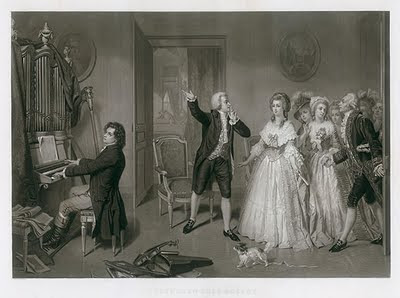
Concerto cadenzas may be written or improvised. Today, the performer of a classical concerto often plays standard cadenzas, composed in the style or transcribed from earlier performances. As we are going to see today, there are also more adventurous approaches.

Karlheinz Stockhausen wrote cadenzas for Mozart's clarinet concerto & flute concerto No. 1, and for Haydn's trumpet concerto. The recording is available: Stockhausen conducts Haydn & Mozart (with his own cadenzas).


Beethoven improvises for Mozart...
(details at the Beethoven Gateway)

For Harvard professor Robert Levin, himself an amazing improviser, a cadenza to a classical concerto is a real one only when it is improvised. And he is a master at re-creating the magic of improvisation within a given style.

The new cadenza: modern, composed & improvised, with live electronics, too!

The approach pianist Seda Röder took for Beethoven's Emperor concerto inherits from both the composer's and the improviser's ways. She collaborated with composer Edgar Barroso on a live electronic music set-up. She was then able to improvise a cadenza with this augmented piano. Here is the video:

More details on Seda Röder's blog post "Beethoven Now".

Many artists have played modern cadenzas to classical concertos. Chick Corea's Mozart Sessions come to mind. You might have a favorite I am not aware of. Don't hesitate to share in a comment!

Tuesday, July 5, 2011

Composing & Automatic Score Following

In the field of computer music, whether developing automatic score following projects is worth the effort is a debated question. While some composers find it absolutely necessary, others have been disappointed with the early results, or question the artistic need, and don't want to consider it.

Yesterday at Ircam, Arshia Cont presented the anticipatory score following system Antescofo.

The most important in Arshia's approach is that beyond technical considerations, he underlines the importance of the creative act. When you compose music for traditional instruments and live electronics, you should strive to conceive the electronic music at the same time as the written notes. The paradigm of the "instrumental score" separated from the "electronic music instructions" should have disappeared already!

Thanks Arshia for your presentation, it's always a pleasure to see you!