Tuesday, January 26, 2010

Alea III plays a Third Stream Composition

Third Stream Concerto par Alea III

Last year, the contemporary classical music ensemble Alea III performed the première of my composition Viola palustris. It would be fair to speak of Third Stream Music, since the piece is a concerto for a jazz soloist and a classical music ensemble.


Watch on youtube: Third Stream Music - Viola palustris by Alea III

Alea III, dedicated to new music

Alea III is giving his Young Composers' Workshop Concert this Wednesday, January 27th, at 7:30pm in TSAI performance center, in Boston. The exciting program includes new music by the following composers:

If you are a composer, make sure you check the Alea III's composition competition (you may submit an application until March 15).

composition Third Stream jazz classical concerto
Viola palustris: the first page of the section with the triangle ostinato

Wednesday, January 20, 2010

The Physics of Music & Sound at Harvard

Musique

Next week, Spring courses start at Harvard University. I am very excited to be a Head Teaching Fellow for the course The Physics of Music and Sound, taught by Professor Eric Heller. Eric Heller is a true sound lover, but his interests cross many boundaries, as you can check on the Heller Group page.

A Gen Ed course

All incoming students at Harvard College must complete, over the course of their undergraduate education, one letter-graded course in each of the eight categories in the Program in General Education. One goal is to ensure that the undergraduate education encompasses a broad range of topics and approaches. The Physics of Music and Sound are in the category Science of the Physical Universe.

As Pr. Heller says in the course syllabus: In keeping with the new GenEd philosophy, the class will be made as participatory as possible. Discussions, live demonstrations of experiments, student demonstration of voice and instruments, computer experiments that you can also easily do, peer instruction and PRS “clicker” participation are all part of the experience.

Check the course trailer on the Harvard General Education web site.

siren sound physics
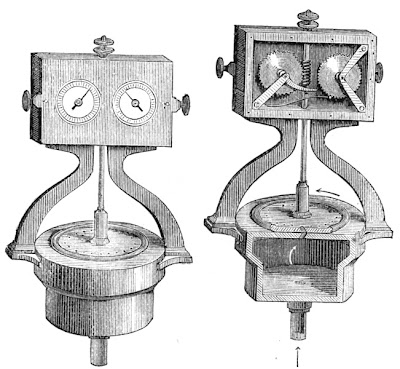
We'll study - and experiment with - sirens!

Final projects

A hands-on approach to learning is also implemented by the presence of final projects for all students. Replacing more traditional exams, the projects will be the occasion for the students to turn to their special interests. The students will choose projects from a list, or come up with their own (with approval of the teaching staff). The propositions in the syllabus are already very exciting, for instance:

  • Acoustical consultant - coloration of sound as function of position in room, objects in room, proximity to walls etc.; ambient sound, echo studies, reverberation time. Measure, analyze, and offer opinions on concert halls and other soundspaces.
  • Noise: how is it generated? e.g. rustling or crushing paper, tire noise, wind turbulence, etc. Related: the sound of things breaking: a twig, glass, rips (paper, foil, cloth) etc. What are the technologies/possibilites for cutting noise off at its source; of reflecting or attenuating on its journey, or for canceling it before it enters our ears? May include investigations of noise levels and noise regulations near Harvard: start with the shuttle busses!
  • Building of an experimental musical instrument or sound generation machine (e.g. voice mimic) - explain its principles, demonstrate and play it (or them) for the class.
  • Sound in technology and medicine: ultrasound imaging, sonar (side scanning imaging), noise cancellation technology, imaging with ambient sound (the analog of imaging with ambient light). Principles of studio acoustics with examples.
  • Scientific historian: following the traces of Wallace Clement Sabine at Harvard, including mastering his discoveries of the early 1900’s.

I'm looking forward to helping out all the students in their discovery of the Physics of Music & Sound. Surely, my studies at the National Institute for Applied Sciences in Lyon, as well as my experience in electronic music will come handy. But as importantly, and thanks to the open structure of the course, I know that I am going to learn a lot: the world of music and sound is so vast!

Tuesday, January 12, 2010

Max patches - phase vocoder & audio freeze back online

audio freeze Max

After I wrote the Computer Music Journal article A Tutorial on Spectral Sound Processing Using Max/MSP and Jitter, I made available a number of Max patches designed to study graphical sound processing, time stretching, and spectral audio freeze, and to create new music! Several professors use these patches when they teach the FFT (Fast Fourier Transform) in Max and its musical applications.

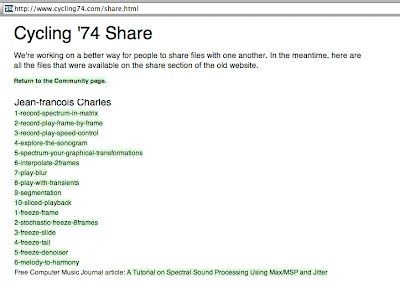
cycling 74 share page
you'll have to browse down the page to find my name & the associated patches

These patches disappeared from cycling74's web site when they revamped it in November of 2009. Good news, the share page is back; download here 16 free spectral Max patches:

  • 1-record-spectrum-in-matrix record sound directly in spectral domain
  • 2-record-play-frame-by-frame schematic playback
  • 3-record-play-speed-control playback slower or faster
  • 4-explore-the-sonogram the sonogram is an essential tool for the modern musician
  • 5-spectrum-your-graphical-transformations build your own graphical sound processing
  • 6-interpolate-2frames one way to interpolate between frozen sonic frames
  • 7-play-blur the stochastic secret to extreme time stretching
  • 8-play-with-transients faster on consonants, slower on vowels?
  • 9-segmentation basic sound slicing
  • 10-sliced-playback slice a sound and playback with fun
  • 1-freeze-frame freeze a sound: the idea
  • 2-stochastic-freeze-8frames sounds better
  • 3-freeze-slide musical interpolation between frozen sounds
  • 4-freeze-tail music & comets
  • 5-freeze-denoiser several composers used this one in their works
  • 6-melody-to-harmony like Stockhausen, compose your harmonies after your melodies

You will find great patches uploaded by other musicians and composers from the Max user community: make sure to explore the content of this share page!

Thursday, January 7, 2010

Electroclarinet 1 - From draft to score

Electroclarinet 1 draft score page 1Electroclarinet 1 draft score page 2

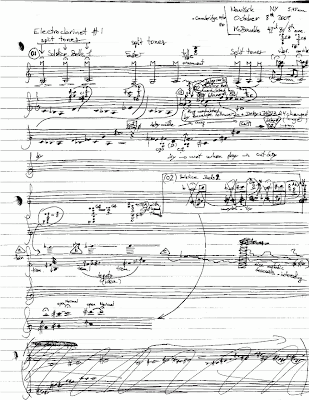
The draft of Electroclarinet 1

Electroclarinet 1 performance score page 1 Electroclarinet 1 performance score page 2

My score for the première of Electroclarinet 1

A serial composition inspired by Steve Vai and Wolfgang Amadeus Mozart

Electroclarinet 1 brouillon partition

As you may recall, this title was one of the slides in my Shanghai Max MSP (and beyond) presentation. The Steve Vai influence may be obvious (when I was composing, I discovered his double DVD Where the Wild Things Are.) So I'll try to highlight how the piece is related to twelve-tone serialism and Mozart.

The easiest link is Mozart: you might have already recognized that the last minute of Electroclarinet 1 is no more than 18/60 - True Night, a Mozart-inspired minute of music. Now, how is this music serial?

Well, it turns out that 18/60 - True Night is not just the last section of Electroclarinet 1, but really a seed for the whole composition. You can see that by comparing the draft above with the score of 18/60 - True Night.

We can also trace the three first pitches of True Night throughout Electroclarinet1:

series music 12 tone
4 transpositions of the 3 note motive: that looks like a 12-tone series!

  • the three opening pitches of the piece (F, G, A). They must be played as split tones, the kind of multiphonic sounds played with normal fingerings, and sounding especially rich on the lowest notes of the clarinet. I liked to make this naturally inharmonic spectrum interact with the inharmonicity of the live electronics, a dynamic frequency shifting (ring modulation).
  • the three successive high notes (Ab, Bb, C). These are multiphonics over trills, or rather tremolos. After writing the high pitches, I figured out which exact tremolos I wanted by trying out with the clarinet.
  • (B, C#, D#) are played as multiphonics as well, the lowest pitches of the multiphonics being shadow "false fundamentals" of the high fingered pitches.
  • Finally, (D, E, F#) start the last minute of the piece. And to round off the composition, the three last pitches are the same as the first ones (F, G, A) - that's quite a classical approach, of course.

Listen to Electroclarinet 1.

Friday, January 1, 2010

Electroclarinet 1 - Live in Shanghai

<a href="http://jfcharles.bandcamp.com/track/electroclarinet-1-live-in-shanghai">Electroclarinet 1 - live in Shanghai by Jean-Francois Charles</a>

clarinette electronique temps reel audio freeze

I recorded my own performance of Electroclarinet 1 in Shanghai. This is the direct sound from the clarinet (do you see the wireless microphone on the picture?) and the live electronics.

Jean-Francois Charles Electroclarinet 1 Clarinet Live Electronics
Shanghai, October 20th, 2009. Hope you like the white clarinet bell!
Picture by a member of the festival's organization.
Check the program notes on this announcement.

Frozen sounds in Electroclarinet 1

It's winter, and although it's not too cold in Cambridge today, it's a good time to talk about audio freeze (the equivalent of frozen frames in video). We can hear two different versions of frozen sounds in this composition:

  • from 2:50 to 3:50, several tremolos (sometimes arpeggios) are immediately frozen, and followed most of the time by a melodic phrase.
  • from 4:48, a high pitch (concert A) is frozen. Later, notes are added to this sound, building into a chord. The first note is added at 5:00, then 5:03, etc. The ice is melting at 5:26, when the frozen chord undergoes a long descending glissando.

I wish you a great - & warm - new year!